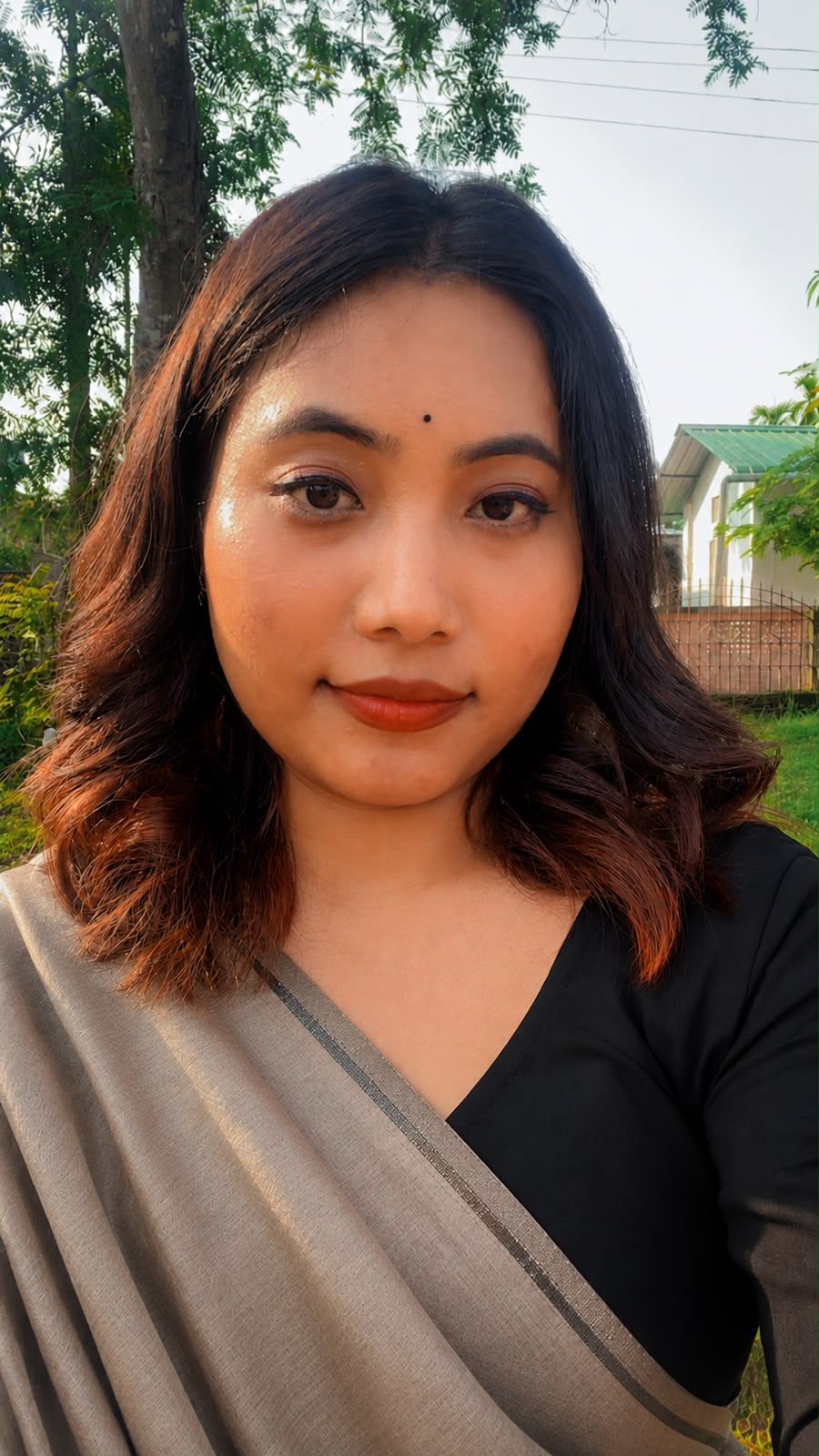

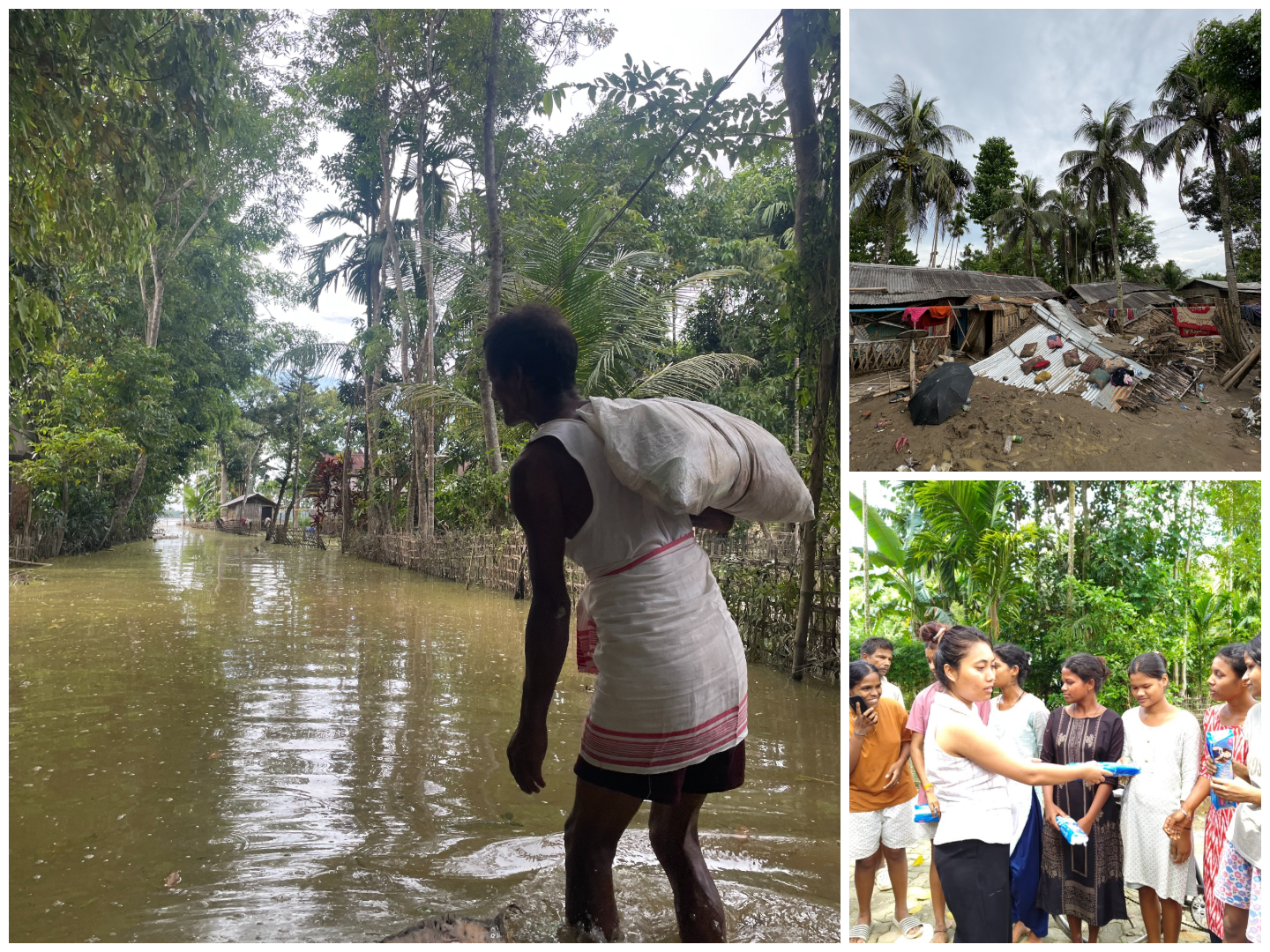
The floods in Assam were not just headlines for me. They were unfolding in Sonari, Charaideo—my hometown, the place where my family, memories, and roots live. Being away from home, I followed the situation through phone calls, messages, photographs, and videos. Each time I tried calling my family and found their phones unreachable, my anxiety grew. Soon, the news coming from Charaideo, Sivasagar, and Jorhat became increasingly alarming. Villages were submerged, people were displaced, transportation was disrupted, and reports of lives lost—both human and animal—began to emerge.
Initially, when I saw videos of the floods on social media, I could not grasp the true scale of the disaster. Many videos circulating online were misleading or unrelated to Assam. But as verified reports started coming in, the seriousness became undeniable. Homes were completely underwater, livelihoods were destroyed, and families forced to flee for their lives, leaving everything behind.
I had never witnessed a flood of this magnitude in our district in my lifetime.
When I finally managed to speak with my family after one or two days, my mother shared her experiences from the ground. Listening to her was painful. Soon after, she fell ill and needed me, so I decided to travel home. By then, relief work had already begun in many areas, and I felt a strong urge to contribute—to do something meaningful for my own people.
I decided to raise funds, starting within our own circle. I discussed the idea with our Executive Director, who encouraged me to go ahead. I shared a simple appeal in our WhatsApp group, hoping that people would respond.
They did—willingly and wholeheartedly. Colleagues and well wishers contributed according to their capacity. Some gave more some gave whatever they could. Every contribution carried the same emotion: a desire to help.
Seeing the Reality First-Hand
When I reached the field with friends and local volunteers, my initial focus was on children. I believed they needed special care during such a crisis. In one of the affected areas, we distributed new clothes to children.
.jpg)
But as I continued visiting different communities, my understanding changed completely.
Seeing the devastation with my own eyes was nothing like watching videos on a screen. Photographs and clips could not capture the scale of loss, the exhaustion on people’s faces, or the eerie silence that comes after a disaster.
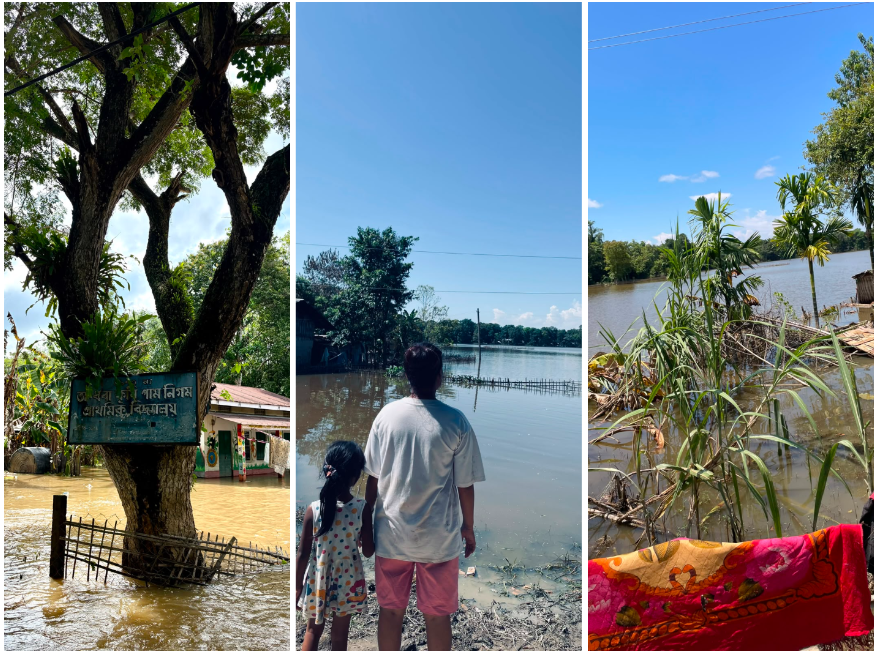
I saw homes completely submerged. Families living in relief camps and on roadsides. People who had lost clothes, food supplies, medicines, and basic everyday household items.
They were not asking for luxury. They were asking for essentials – food, clothes, drinking water, medicines, mats to sleep on, menstrual hygiene products
For many families, even these basics had become difficult to access.
The sentence I heard repeatedly was: “We have never seen a flood like this before.”
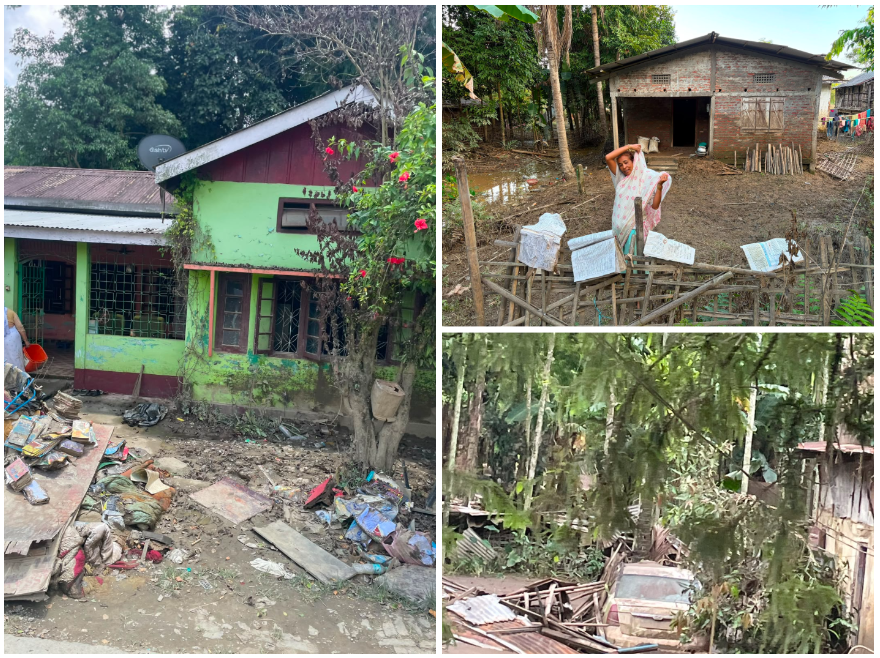
The Reality Beyond Social Media and Giving with Dignity
One of the biggest lessons from my experience was that the ground reality was far more complex than what social media showed.
I saw people from all backgrounds helping—individuals, volunteers, organisations, influencers, and ordinary citizens who simply wanted to support those affected. Many were doing sincere, meaningful work, travelling to difficult areas, preparing food, collecting materials and reaching communities that needed support.
But I also witnessed moments that were difficult to watch.
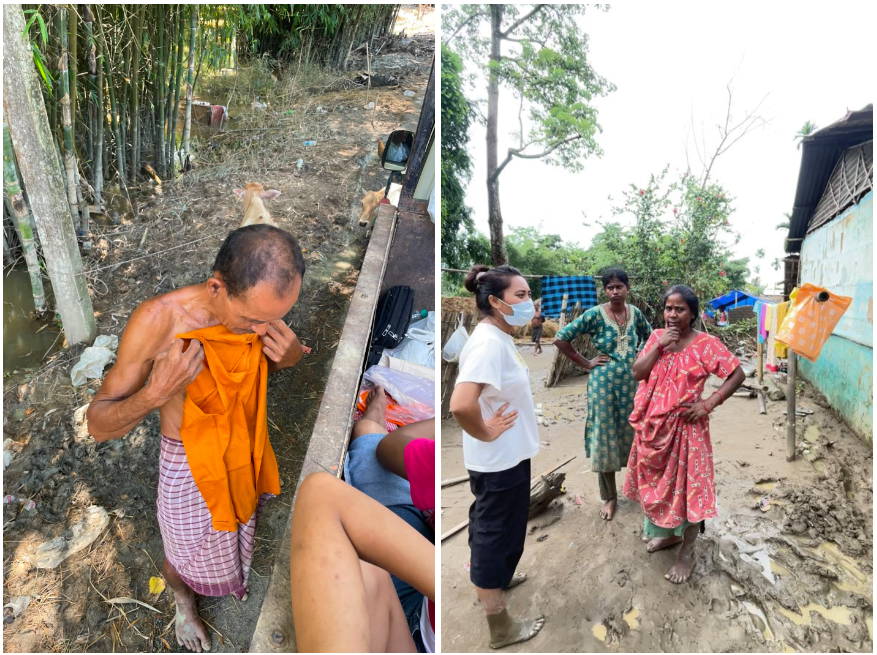
People made to stand in long queues for hours for a packet of biscuits or a piece of clothing. People who had lost everything were sometimes made to feel like mere recipients of charity.
What disturbed me was not the quantity of relief— during a disaster, every packet of food and every piece of clothing can matter - it was the manner in which it was given.
At times, the focus shifted to photographs and videos rather than being present with people who were suffering. I also saw how caste, gender, village identity, and economic status surfaced even during relief distribution.
Yet, I do not want these experiences to overshadow the many good efforts I witnessed. Many individuals and groups quietly reached difficult places that were receiving little attention. They helped without expecting recognition. Their compassion was genuine.
This experience taught me an important lesson - Relief is not only about what we give; it is also about how we give it. A person who has lost their home should not have to lose their dignity as well.
In the field, people often requested not to be given damaged or old clothes. Their message was clear: they had lost their belongings, but not their dignity.
This became a guiding principle for me while using the funds we raised. I wanted our assistance to reach those who genuinely needed it—and to be provided with respect, compassion, and sensitivity.
Wherever possible, we tried to understand what people actually needed instead of distributing whatever was available.
Our Response
Starting 29 July 2026, our team of friends and local volunteers, conducted field visits to severely affected communities to understand the situation directly and identify families requiring urgent support.
Instead of distributing standard relief kits, we assessed needs on the ground and procured items accordingly. This allowed us to respond to specific requirements of women, children, and families who had lost essential belongings.
Relief activities were carried out across Borahi Gaon, Tengapukhuri, Bhadhora Gaon, Bihubor, Nepalikhuti, Nimaijan
.png)
What We Provided
Food items, drinking water, ORS packets
Medicines, Phenyl, Sanitary napkins, Mosquito repellents
Children’s clothing, T shirts, Inner garments, blouses, and other essential clothing items
Mats and Rope
Transportation support was arranged to reach communities that were difficult to access.
All this was possible because of the generosity of our donors and supporters. We raised
₹53,570 and spent ₹ 53,570. Every rupee was used for documented flood relief activities.
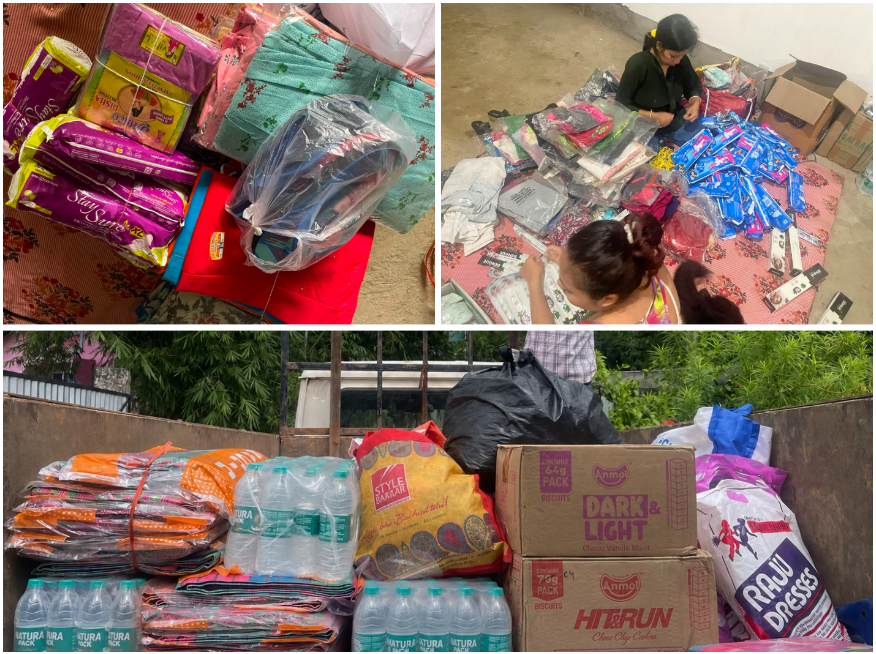
The field response showed us that flood relief is about much more than providing food. Families who have been displaced may need basic items such as a mat to sleep on, clothes to wear, sanitary products, medicines, safe drinking water, and other everyday necessities.
In Nimaijan, where the village remained submerged and families were staying in relief camps and roadside shelters, the team distributed mats and essential clothing to support families who had lost access to their household belongings.
Similarly, in Bhadhora Gaon, medicines and phenyl were distributed, reaching approximately 50 people.
These interventions were possible because of the support received from our donors.
Beyond the Numbers
The impact of the floods will continue long after the water recedes. Families have lost homes, belongings, agricultural resources, livestock, and livelihoods. Many will need much more support to rebuild their homes, replace essential items, and restore their livelihoods.
Children and vulnerable individuals will require continued support to return to once-normal routines, including education and access to essential services.
Our immediate relief response was only a small first step. Recovery will take much longer.
Acknowledgement of Donors
I wish to extend my heartfelt gratitude to every individual who contributed to this relief response. Your support helped us reach families facing immediate hardship.
Your contribution did not remain just a donation. It became food, drinking water, medicine, clothing, hygiene products, mats, and essential household support.
Most importantly, it became hope.
Thank you for standing with the flood affected communities of Assam. Your support reached people at a time when they needed it most.
With gratitude,
Thank you 
| Aditya Handique, Akanshya Dutta, Amvalika Senapati, Anil Saikia, Anindita Bhuyan Antara Sharma, Arati Sharma, Arindom Saikia, Bijoy Singh, Biswajit Saikia, Diba Nahin, Debojit Deb, Dipam Das, Dipanjali Kalita, Himanta Biswa, Hridinayana Dutta, Jahnu Baruah, Jayashree Bharali, Jintumoni Das, Jutshna Sutradhar, Kangana Das, Kandarpa Nath, Kaveri Borah, Ketaki Bardalai, Kavita PatowaryLakhyajit Gogoi, Madhumita Das, Mahendra Mohon, Mamta Ghosh, Mayurakshi Dutta, Monika Das, Mrinalini Thakuria, Panchali Boro, Parishma Dutta, Prafulla Barman, Puja Devi, Samiran Sharma, Satabdi Borgohain, Saswati Saikia, Saurav Chakaraborty, Sukramjit Singh, Vinita Kurup |